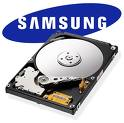
Samsung Hard Disk Drive Data Recovery Partners

Samsung Hard Disk Drive Data Recovery For your reference, below is a list of data recovery service providers that can open your Samsung HDD product and (if connected through the link below) provide a seal or proof of data recovery that will not void your Samsung HDD limited warranty.

Samsung Hard Disk Data recovery partners:

1. CBL data recovery technologies

At CBL, They provide data recovery services for failed hard drives in laptops, desktop computers, data servers, RAID arrays, tapes and all other data storage media. Recommended by major manufacturers, CBL’s hard drive recovery services are ‘warranty-safe’ and backed by our ‘No Data, No Charge Guarantee’.

CBL’s Data Recovery Service Advantages:

  • Free Evaluation With Written Quote
  • 24/7/365 Customer Service
  • 100% Customer Privacy and Confidentiality
  • Worldwide Data Recovery Service Coverage
  • Discount Price

2.  Ontrack Data Recovery

Samsung have partnered with Ontrack Data Recovery, the world leader in data recovery services, to offer you:

Ontrack Data Recovery can offer you:

  • Affordable solutions
  • Report showing recoverable files – before you pay
  • $100 instant rebate
  • 100% guaranteed price quotes – no hidden charges
  • Additional 10% discount
  • Professional support – before, during and after the recovery

3. RECOVERY LABS

With 3,000+ new SATISFIED CUSTOMERS every year, Recovery Labs provides you with DEMONSTRATED SUCCESS RATES of over 90%, on top of FREE LISTING REPORTS.

RECOVERY LABS’ Data Recovery Service Advantages:

  • Discount 20%(up to 40%) in data recovery.
  • Free of charge door to door delivery service.
  • Free of charge diagnosis and quotation.
  • If you are not completely satisfied with your recovery, you will not be billed.
  • Continuous customized support all along a 24/7 process.
  • ISO 9000:2001 certified Data recovery and Secure Data Deletion.
  • A dedicated laboratory equipped with a Class 100 Clean Room.

4. MYUNG INFORMATION TECHNOLOGIES.,Ltd

Who shall be a company working for happiness of customers and a company working condition rather than excellence data recovery company.

MIT can offer you:

  • Discount in data recovery.
  • Free of charge diagnosis and quote.
  • If you are not completely satisfied with your recovery, you will not be billed.
  • ISO 9000:2001 certified Data recovery and Secure Data Deletion.
  • A dedicated laboratory equipped with a Class 100 Clean Room.

Note: SAMSUNG IS NOT LIABLE IN ANY WAY FOR LOSS OF DATA WRITTEN TO OR SAVED ON ANY SAMSUNG HDD PRODUCT, OR FOR ANY DATA RECOVERY OR ATTEMPTED DATA RECOVERY.

Read More

HDD Makes Random Clicks When Windows is Booting

When I boot my computer up in the morning, my hard drive(Maxtor 500 GB) makes random clicks as it loads windows. I never seem to notice it making those sounds once windows is booted up or if I restart the computer after it has been running for a while. Only when it starts up cold. I have also noticed that occasionally the MSE icon won’t load into the tray, even though the program is running and is set to display in the tray. A restart fixes that issue.

Is there something wrong with my drive? Should I be looking into buying a new drive and having the old one copied over to it? Or is this nothing to really worry about? It has been doing this since at least June of 2011 with no changes.

At a minimum backup the data you do not want to lose. You might even want to clone your HDD to another HDD. It sounds like yours is dying.

Read More

HP Recovery Partition

HP Recovery Partition Many HP computers are shipped with a recovery partition on the hard drive. This separate and dedicated partition is used for backup and recovery of system files and drivers in case the system becomes unstable. Using the recovery partition allows you to restore the HP to its original state.

Note: Backup your data often using HP Recovery Manager or other backup software to multiple sets of drives to avoid losing important files in the event of a system crash.

How to Boot an HP Recovery Partition?

  1. Press the power button to start the HP. Press and hold the F11 key to launch the HP Recovery Manager from the recovery partition.
  2. Backup any files you want to save. Follow the HP Recovery Manager instructions to save any important files before continuing with the recovery process.
  3. Continue the recovery process. After backing up files to an external device or CD/DVDs, select the option to perform a system recovery.
  4. Obtain and install updates for the HP. After your system reboots, use HP update manager as well as Windows update to restore all critical updates to your HP computer.
  5. Make a set of recovery disks. Use HP Recovery Manager and select “Advanced Options” to create a set of recovery disks that can be used in the event that your HP cannot access the hard drive.

How to Repair an HP Recovery Partition?

Many newer Hewlett Packard (HP) computers can be recovered from data stored on a partition on the hard drive. If this partition or the data stored within it becomes damaged, you will not be able to restore your computer’s files in the event of data loss. Fortunately, the HP recovery partition can be repaired without too much difficulty. However, it’s important to back up your files because you will have to format your hard drive and reinstall your operating system to repair the damaged partition.

  1. Navigate to the Hewlett Packard website. Search on the model name and number of your computer. Under “Select a product,” choose the model computer that matches the one you own. Under “Product Quick Links,” click “Software and driver downloads.”
  2. Select your operating system. Scroll down to “CD-ROM order page: Recovery Disks” and click on the link. If the recovery disks for your model computer are no longer available on that page of the HP website, search for your computer model in the HP Parts and Accessories store area. If HP doesn’t have the recovery CDs in the store, order them from an auction site such as eBay or check a reputable computer parts retailer. Back up all of your data to removable media while you are waiting for the CDs to arrive.
  3. Disconnect all peripheral devices from your computer when you get the recovery CDs. Leave only the power cable, monitor, mouse and keyboard connected. Place the first recovery CD in the optical drive you use to boot your computer. Restart your computer.
  4. Select “Advanced Options” from the recovery CD menu. Select “Exit to DOS.”
  5. Type “FDISK” at the command prompt. Press “Enter.” Press “Y” and press “Enter” again.
  6. Press “1” to create the DOS partition and make it active. Press “Y” and then “Enter” to continue. Ensure that the first CD from your recovery disk set is still in the optical drive you use to boot the computer. Press the “Esc” button to restart your computer.
  7. Follow the instructions on the screen to restore the recovery files from the CDs to the recovery partition. Remain near the computer so that you can supply the additional CDs when prompted to do so. After the files have been rewritten to the recovery partition, the HP software will begin to recover your computer’s files from the partition.

If necessary, enter your computer system’s BIOS setup program to change the boot priority so that the computer boots from the CD drive, then restart the computer again.

Read More

The Truth about Data Recovery

The Truth about Data RecoveryComputers can, without a doubt, be complicated beasts; one minute they are doing exactly what you want them to do, and the next they are suddenly going off and doing their own thing.  And before you know it, your computer crashes, leaving you with missing files, an increased heart rate and a bad temper.  But before you’re ready to throw your computer out the window in anger, let’s take a few deep breathes and talk about what actually happens when a file accidentally deleted and explore possible ways of getting that information back again.

For starters, when you unintentionally delete a file and begin to have a panic attack once the file has disappeared, you can rest assured that your file is not lost forever (phew!). The file will not be immediately visible in the directory or folder that you (or the computer) thought you stored it in. Instead, the file gets re-named so that the path it was using can be overwritten and can then be found in a hidden index file. The good news is, it can be completely recovered from this file if needed. In fact, all data continues to be stored on your computer until it is completely overwritten. And just to clear something up, by overwritten, I do not mean different information. It takes a random mix of binary code (0 and 1) to completely obliterate a data or file’s information. This is why hard drives should be absolutely and completely destroyed to an unrecognizable pulp or at least be overwritten by using a program that exists to overwrite data. Do not just recycle your computer or sell it to someone else without getting rid of your data properly first, or you could come to regret it later. This is especially important if you have sensitive information or media on the computer!

So now that we have established that data recovery is possible, how is it done? Well, there are a number of cleverly devised free and paid versions of data recovery programs available, depending on what your data recovering needs are. For example, you may have just accidentally deleted a file. Recovering this is relatively simple when compared to trying to recover data from a damaged or corrupted file. Not only can you retrieve the data but you can also use the software to recover other types of deleted information such as emails or email attachments.

Some paid data recovery programs have a “no recovery – no fee” guarantee.  This may seem like a pretty high guarantee to offer, but if self-recovery or the free programs aren’t giving you the results you need, the paid programs might be better route to take.  Furthermore, the free programs may have a smaller range of capabilities; how/why your data was lost in to begin with will likely determine how it can be recovered. No matter how you lost your data and how hopeless you think the situation may be in returning that data to your computer, fear not. There are data recovery experts available to help you no matter how severe your data loss may (seem to) be!

Read More