The 1T Seagate mobile hard disk fell on the ground and did not recognize the disk and the recovery was successful

Case:1T Seagate’s mobile hard disk, accidentally falling to the ground, the hard disk cannot be recognized. After the engineer’s test, the magnetic head damage fails, the disk must be treated Solution:The engineer first evaluated the degree of damage to the hard disk.According to the requirements of the magnetic head, select the appropriate hard disk spare…

Read More

Hard Disk Details (2)

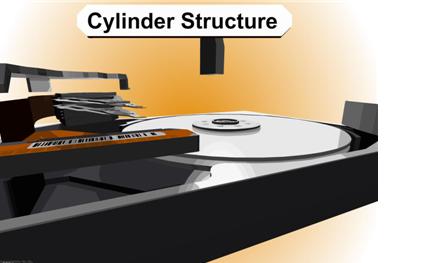
The hard drive knows nothing about your files and is not aware in any way of the content. That is the job of the Operating System (OS from here on). When the OS asks for a file, the OS will request a logical block from the drive; the drive will translate that to the physical location in CHS. An example is that it might request data from Cylinder 2500 at head 2 located on sector 234. The drive has many spare sectors and sometimes spare tracks to be used to compensate for errors and relocation of data. NOTE: Look at $BadClus on a NTFS File system for what the OS thinks is bad.

In a previous speech here at Defcon 14, I gave the basic inner workings of a hard drive and several ways you can repair it. I am sure that you can get that previous speech on DVD, find it on the web, or on www.myharddrivedied.com and it will give you a large amount of info that I am not going to discuss here today.  Additionally, there is a whitepaper on the CD that includes more data and notes about repairing a hard drive.

Since my last speech one of the most common questions I get everyday is “What is that clicking noise? How do I fix it?” This is not a simple problem by any means.  So my goal today is to give you more insight into the inner workings your hard drive and explain how this problem occurs and what you might be able to do to fix it.

Slide 1208: In this speech we are looking at the platter assembly where the heads are located, through the area of the preamp and the IC Logic Board down to the PCB.  This is the area that affects what is causing the clicking noise that you hear.  I am now going to explain how each of these things works and walk you through the drive functions.

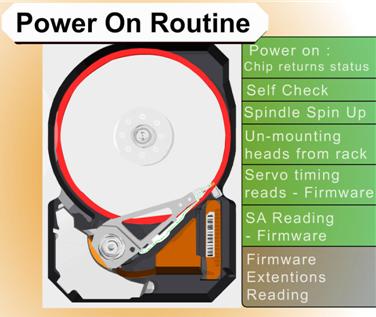
Part of what causes this clicking problem is related to the power on routine functions.

The boot sequence of a drive is as follows:
1.      Power on chip returns status
2.      Self check
3.      Spindle spin up
4.      Un-mounting heads from rack
5.      Servo timing reads – firmware
6.      SA reading – firmware
7.      Firmware extensions reading
8.      Error – read SA from other secondary copies

Read More

The hard disk repeatedly prompts that the file is damaged and the data recovery is successful

Case:The operating system is Windows, the file system is NTFS/FAT, and a 450G Toshiba hard disk; the computer repeatedly prompts the file damage during use. After the special equipment detection, there are multiple bad sectors in the hard disk. Solution:The engineer evaluates the degree of damage to the physical bad sectors of the hard disk.When…

Read More

2060-771961-001 WD PCB Circuit Board

HDD Printed circuit board (PCB) with board number 2060-771961-001 is usually used on these Western Digital hard disk drives: WD10JMVW-11AJGS4, DCM EBNT2BB, Western Digital 1TB USB 2.5 Hard Drive; WD7500BMVW-11AJGS0, DCM EHKTJHK, Western Digital 750GB USB 2.5 Hard Drive; WD10JMVW-59AJGS2, DCM HHMT2HKB, Western Digital 1TB USB 2.5 Hard Drive; WD10JMVW-11AJGS4, DCM HBJT2HB, Western Digital 1TB…

Read More

Seagate Internet Drive – How to create, move a folder?

How do I create a folder on my Internet Drive?

The following shows how to create a folder on your Seagate Internet Drive. This assumes that you have already logged into your Seagate Internet Drive account:

  • From your Internet Drive page, click NEW FOLDER
  • The CREATE NEW FOLDER applet opens. In the field provided, type the name of the folder you wish to create and click NEW FOLDER. The folder is created.

Note: For more information on Internet Drive features, visit www.memeo.com.

FreeAgent Drive Flash Video: Seagate Internet Drive – How To Creat a Folder

How do I move a folder on my Internet Drive?

The following shows how to move folders on your Seagate Internet Drive. This assumes that you have already logged into your Seagate Internet Drive account:

  • Select a folder you wish to move and click MOVE
  • The MOVE FILES OR FOLDERS applet opens. From te drop down menu, select a folder to move folders to and click MOVE. The folder is moved to its new location.

Note: For more information on Internet Drive features, visit www.memeo.com.

Flash Video: Seagate Internet Drive – How To Move a Folder

Read More