Data Recovery From Physical & Logical Damage

Logical Damage Data Recovery:

Data Recovery From Physical & Logical DamageOverwritten data
When data have been physically overwritten on a hard disk it is generally assumed that the previous data are no longer possible to recover. In 1996, Peter Gutmann, a computer scientist, presented a paper that suggested overwritten data could be recovered through the use of Scanning transmission electron microscopy. In 2001, he presented another paper on a similar topic. Substantial criticism has followed, primarily dealing with the lack of any concrete examples of significant amounts of overwritten data being recovered. To guard against this type of data recovery, he and Colin Plumb designed the Gutmann method, which is used by several disk scrubbing software packages.

Although Gutmann’s theory may be correct, there’s no practical evidence that overwritten data can be recovered. Moreover, there are good reasons to think that it cannot.

Corrupt filesystems
In some cases, data on a hard drive can be unreadable due to damage to the filesystem. In the majority of these cases, at least a portion of the original data can be recovered by repairing the damaged filesystem using specialized data recovery software. This type of data recovery can be performed by knowledgeable end-users as it requires no special physical equipment. However, more serious cases can still require expert intervention.

Online Data Recovery
“Online” or “Remote” data recovery is yet another method to restore the lost or deleted data. It is same as performing the regular software based recoveries except that this kind of recovery is performed over the Internet without physically having the drive or computer in possession. The recovery technician sitting somewhere else gains access to user’s computer and complete the recovery job online. In this scenario, the user doesn’t have to travel or send the media to anywhere physically.

Although online data recovery is convenient and useful in many cases, it still carries some points making it less popular than the classic data recovery methods. First of all, it requires a stable broadband Internet connection for it to be performed correctly, which many third world countries still lack. Also, it cannot be performed in case of physical damage to media and for such cases, the traditional in-lab recovery has to take place.

Physical Damage Data Recovery:
A wide variety of failures can cause physical damage to storage media. CD-ROMs can have their metallic substrate or dye layer scratched off; Hard disk drives can suffer any of several mechanical failures, such as head crashes and failed motors; Tapes can simply break. Physical damage always causes at least some data loss, and in many cases the logical structures of the file system are damaged as well. Any logical damage must be dealt with before files can be salvaged from the failed media.

Most physical damage cannot be repaired by end users. For example, opening a hard disk in a normal environment can allow airborne dust to settle on the platter and become caught between the platter and the read/write head, causing new head crashes that further damage the platter and thus compromise the recovery process. Furthermore, end users generally do not have the hardware or technical expertise required to make these repairs. Consequently, costly data recovery companies are often employed to salvage important data.

Physical Damage Recovery Techniques:
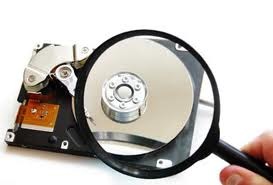
Recovering data from physically damaged hardware can involve multiple techniques. Some damage can be repaired by replacing parts in the hard disk. This alone may make the disk usable, but there may still be logical damage. A specialized disk-imaging procedure is used to recover every readable bit from the surface. Once this image is acquired and saved on a reliable medium, the image can be safely analysed for logical damage and will possibly allow for much of the original file system to be reconstructed.

Hardware repair
Media that has suffered a catastrophic electronic failure will require data recovery in order to salvage its contents.

Examples of physical recovery procedures are: removing a damaged PCB (printed circuit board) and replacing it with a matching PCB from a healthy drive, performing a live PCB swap (in which the System Area of the HDD is damaged on the target drive which is then instead read from the donor drive, the PCB then disconnected while still under power and transferred to the target drive), read/write head assembly with matching parts from a healthy drive, removing the hard disk platters from the original damaged drive and installing them into a healthy drive, and often a combination of all of these procedures. Some data recovery companies have procedures that are highly technical in nature and are not recommended for an untrained individual. Many of these procedures will void the manufacturer’s warranty.
Read More

Cables for Ultra ATA/66 to Ultra ATA/133 Drive Users

Ultra ATA/66 to Ultra ATA/133 Drive Cables Why must I use this type of cable?

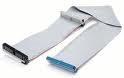
The faster timing requirements of Ultra ATA/66 and above require the use of an 80-conductor cable. This is necessary for proper operation of UDMA modes 3 and greater. The 80-conductor cable is used with the same connector configuration as the standard 40-conductor cable. The 40 additional conductors are used as ground paths and are all connected to the 7 original ground conductors. These additional ground conductors serve to improve the overall signal quality (signal-to-noise ratio) of the ATA cable. 80-conductor Ultra ATA cables are also limited to a maximum cable length of 18 inches.

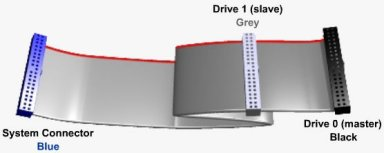
If the drive was purchased in a retail kit and not as a “bare” drive, the kit includes an Ultra ATA cable as described here. If not Ultra ATA cables can be purchased from your system vendor or reseller and are fully backward compatible for operation on all standard/legacy ATA devices and hosts. However, these cables will typically utilize the cable select (CS) configuration on ATA drives for defining a master or slave device (drive 0 or drive 1). The drive placement convention used on an 80-conductor cable is also different from the previous generation of cable select type cables. The 80-conductor Ultra ATA cables require the master drive (drive 0) to be installed at the end of the cable and the slave drive (drive 1) to be installed on the middle connector.

The connectors on 80-conductor cables are also color-coded to help ensure proper drive placement and attachment to the host (system). Typical color-coding is as follows: blue for attachment to the host (system), black is for device 0 (master) and gray is for device 1 (slave).

Ultra ATA/66 to Ultra ATA/133 Drive Cables

This post applies to all Seagate, Maxtor, Quantum ATA 66, ATA 100, and ATA 133 drives.

Read More

Data Recovery – Overview

Many casual computer users never give much thought to or even know about data recovery, but Imagine that you are an author writing a book, a novel, and that you have saved all of the chapters of the book on your computer. Now imagine that you are near completion of the greatest novel of your life and your publisher is waiting for the manuscript when something goes haywire and all of the files on your system unexplainably disappear! Not necessarily a pretty image, but it’s something that happens all too frequently, and it is at just that time you may wish to know something about data recovery. Sometimes the problem is simple—resetting the computer system to an earlier period; defragmenting the computer; and, in some instances, utilizing the scan disk option on a computer will be enough to get the computer operating properly again—but in some instances the problem is far worse. What are some of the typical causes for the loss of files on a computer? Viruses, worms, Trojans, power failure, corruption of data, and even acts of God can cause people to lose files on their computer—files that may be extremely vital, especially if the computer user needs the files for proficient business operations.When a computer user loses all of the files and data on their computer due to a technological issue or to some sort of disaster, it may become necessary to hire a company that handles data recovery. Data recovery specialists can attempt to retrieve the lost information from the hard drive of the computer. Data recovery specialists have the expertise to get the job done and swiftly—this ensures the necessary files are accessible to the computer user in the fastest time possible. Though actual physical damage to the computer’s hard drive may mean that complete recovery of the data may not be possible, many people are surprised at how much data recovery specialists can do, even in the most difficult of conditions.

Read More

CD Optical Storage Glossary of Computer Terms (Letter P)

Paint
to apply color or gradient to an area of an image

Palette
A group of selected colors used by a graphics board. The EGA board uses a palette of 16 colors. VGA boards in some resolutions provide a palette of 256 colors.

PCI Local Bus
The Peripheral Component Interconnect (PCI) local bus

PCMCIA
Personal Computer Memory Card International Association. PCMCIA is becoming the link between desktop and notebook computing for data transfer and storage. PCMCIA slots perform the same functions as expansion slots on PC compatibles.

Photo CD
Generic term used to refer to Digital images on compact disc (see Kodak Photo CD)

Pixel
Picture Element. The smallest element of a screen represented as a point of specific color and intensity level.

Platform
The hardware and operating system that applications are run on

Premastering
In CD-ROM distribution, the process of preparing the data to be placed on the CD-ROM so that is optimally fits the CD-ROM format and limitations.

Primary color
In a tri-stimulus color video system, one of the three colors mixed to produce an image. In additive color systems, the primary colors are red, green, and blue. In subtractive color systems, the primaries are cyan, magenta, and yellow.

Production

In video refers to the process of creating programs. In more specific usage, production is the process of getting original video onto tape or film and ready for post- production.

Read More

Mobile hard disk data recovery

Case:Seagate’s 320GB hard disk data is successfully resumed. The data recovery center has successfully restored important customer data through re -compiling firmware information to recover economic losses for customers.The data recovery center received a call from the customer for help. The customer had a Seagate 320GB hard disk that could not be read normally. Many…

Read More