

Seagate Malfunctions (Barracuda IV, V and 7200.7)

A very common flaw is disruption of protective diode along the +12V circuit and resulting outage of the computer power supply unit. In that case the external look of that component does not allow identification of the damage, because its case remains unaffected. An attempt to connect a drive so damaged to an operable power supply for diagnostics will most likely result in breakdown of the latter. Therefore if such a drive is brought for repair then first of all you should probe the 0 and +12 V circuit with a regular tester to check for a short circuit.

The protective diode originally designed using the “transil” technology at SGS Thomson is intended for protection of electronic circuitry from short power supply peaks not greater than 10 – 20 microseconds. But in that case their common failures demonstrate that HDD designers did not expect to encounter so poor quality of power supply units. Thus drive operation can be resumed after simple removal of that damaged element from its circuits but we cannot guarantee flawless HDD operation without that component.
Read More

2060-771852-004 WD PCB Circuit Board

HDD Printed circuit board (PCB) with board number 2060-771852-004 is usually used on these Western Digital hard disk drives: WD5000LPVT-08G33T1, DCM HHCVJHBB, Western Digital 500GB SATA 2.5 Hard Drive; WD5000LPVT-00G33T0, DCM HHCVJAN, Western Digital 500GB SATA 2.5 Hard Drive; WD2500LPVT-00G33T0, DCM HHCVJHB, Western Digital 250GB SATA 2.5 Hard Drive The 2060-771852-004 Western Digital PCB repair…

Read More

How does HDD store data?

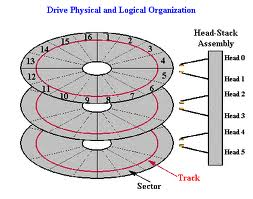
How does HDD store data?Hard disk drives store data on one or more metal oxide platters. These platters spin at a rate of 3600-10,000 revolutions/minute, hold magnetic charges. A read-write head attached to an actuator arm actually floats on a cushion of air, 1-2 micro-inches (one millionth of an inch) above the surface of the platters. Data flows to and from these heads via electrical connections. Any force alters this process may cause data loss.

Ten years ago hard drives stored 40 Megabytes (MB) of data. Today’s hard drives store data up to 2000 gigabytes (GB) on a smaller surface. Increasing storage capacities amplify the impact of data loss. As more and more data is stored in smaller and denser areas, mechanical precision becomes crucial.

As a part of this advancing technology, the drive tolerance (distance between the read/write head and the platter where data is stored) is steadily decreasing. A slight nudge, an unstable power surge or a dust introduced into the drive may cause the head to touch the platter, resulting in a head crash, PCB burnt, bad sectors, etc. In some situations, the data residing in the area touched by the head may be permanently destroyed.

The current tolerance drives is 1-2 micro-inches (millionths of an inch). Comparatively, a speck of dust is 4-8 micro-inches and human hair 10 micro-inches. These sizes contaminants can cause serious data damage.

Read More