Hard Disk Details (2)

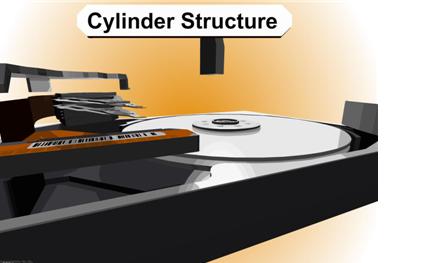
The hard drive knows nothing about your files and is not aware in any way of the content. That is the job of the Operating System (OS from here on). When the OS asks for a file, the OS will request a logical block from the drive; the drive will translate that to the physical location in CHS. An example is that it might request data from Cylinder 2500 at head 2 located on sector 234. The drive has many spare sectors and sometimes spare tracks to be used to compensate for errors and relocation of data. NOTE: Look at $BadClus on a NTFS File system for what the OS thinks is bad.

In a previous speech here at Defcon 14, I gave the basic inner workings of a hard drive and several ways you can repair it. I am sure that you can get that previous speech on DVD, find it on the web, or on www.myharddrivedied.com and it will give you a large amount of info that I am not going to discuss here today.  Additionally, there is a whitepaper on the CD that includes more data and notes about repairing a hard drive.

Since my last speech one of the most common questions I get everyday is “What is that clicking noise? How do I fix it?” This is not a simple problem by any means.  So my goal today is to give you more insight into the inner workings your hard drive and explain how this problem occurs and what you might be able to do to fix it.

Slide 1208: In this speech we are looking at the platter assembly where the heads are located, through the area of the preamp and the IC Logic Board down to the PCB.  This is the area that affects what is causing the clicking noise that you hear.  I am now going to explain how each of these things works and walk you through the drive functions.

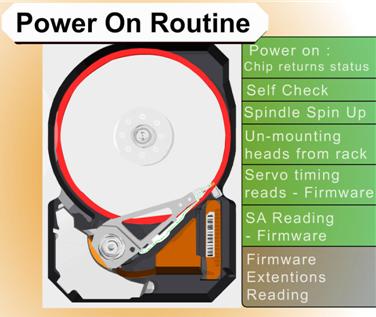
Part of what causes this clicking problem is related to the power on routine functions.

The boot sequence of a drive is as follows:
1.      Power on chip returns status
2.      Self check
3.      Spindle spin up
4.      Un-mounting heads from rack
5.      Servo timing reads – firmware
6.      SA reading – firmware
7.      Firmware extensions reading
8.      Error – read SA from other secondary copies

Read More

How to Fix An iPod?

Being an iPod owner is a wonderful thing! It is no wonder that they are the most popular MP3 players on the market.

You can’t even walk down a busy street without seeing iPod headphones in someone’s ear.

Even though so many people own iPods, it can still be hard to operate them sometimes. Sure they have an easy interface, but it can certainly be helpful to have an online iPod manual to help you out.

The manual that comes with your iPod is ok, but you might occasionally need more help. This site has a mission to provide you with the very best in iPod information so that you don’t have to get frustrated.

If you’re looking for iPod troubleshooting, reviews, accessories information, hacks, and more you’ve come to the right place. Make sure you bookmark this page because you’ll never know when you need the information.

In addition to iPod help, you’ll find fun things as well. Did you know that you can play games on your iPod? It’s true! It’s time to stretch your iPod’s legs and get the most out of your purchase.

There are so many things you can do with your iPod that you’ll fall in love with it all over again. It’s too easy to just rely on it for your music listening needs.

It’s best to really get to know your iPod to get the most out of it. Read books, listen to movies, watch TV shows, and play games on your iPod. This iPod manual will help to get you there.

Why spend a lot of money on other entertainment avenues? You can truly do it all on your iPod. If you don’t have an iPod yet, you’ll definitely want to get one. You can even buy a refurbished iPod that will help to save you money and get you in the game fast.

Sure, your iPod comes with a manual already. However, it doesn’t cover nearly enough information to let you use your iPod to the max.

If you’re having trouble using your iPod, or think that you’re machine is broken, there are many things you can do to fix the problem in a few simple steps.
Read More

Raid Data Recovery Software: ZAR

zar File Name: ZAR
Version: 8.4
Publisher: Zero Assumption Recovery
Raid Supported: RAID 0, RAID 5
Analyze Mode: Manual Mode
Price: US $99.00

What can ZAR Do?
This tutorial describes the data recovery procedure used to recover a RAID 0 or RAID 5 array if
* the controller failed and the array parameters are lost
* Windows software-based RAID configuration data is damaged

Download: http://www.z-a-recovery.com/download.htm
Buy: http://www.z-a-recovery.com/register.htm

Read More

Hard Drive Data Recovery On a Desktop or Laptop Computer

Laptop Data Recovery When a laptop hard drive becomes “unbootable“, and you are unable to repair it, you can often save the data on the hard drive by using a “slave drive” recovery method on a desktop computer. As long as the laptop hard drive has not been mechanically broken and the disk is still “readable“, you should be successful in accessing and preserving the valuable data on the drive.

I know the frustration when you delete something you shouldn’t have, or your hard drive is corrupted. I will show you how to do a data recovery and hard drive recovery from a desktop computer or on a laptop computer. There is some software you can use to undelete software, or even recover corrupted sectors, this is not always going to work, but worth a try when you need your data back. The ultimate recovery, unfortunately, would be to send your disk to a professional data recovery or hard drive recovery place.

  1. If you have deleted something by accident, you can try to recover that file from the recycle bin in Windows. If you have emptied the recycle bin, you may be thinking it is lost forever, but you can try to do data recovery using software that is free. Data recovery is not always going to work, if the hard drive has written over that sector with data from another program, it might be unattainable using home based software.
  2. You can try however to do data recovery using this simple program “Undelete-All“, I have posted it in resources.
  3. If your hard drive crashed and the sectors were corrupted, again a professional hard drive recovery place would be the best, but if you don’t have thousands to spend, you can try a few things that are free.
  4. First you will want to restart and make sure the hard drive is being detected by BIOS, when it restarts press f2, or esc, or del to enter BIOS, every computer is different on how to get in, usually it will say at the bottom of the screen.
  5. Once in BIOS you will see a summary screen, if your hard drive is detected, great! Proceed on to the next steps, if, however, your hard is not showing, I am afraid to say but more then likely it has died, and it would definitely take a professional place to recover, what they do is take the hard drive platter out, and mount it onto a professional machine to recover the data, again this can costs thousands (I’ve checked into it before). There could though be other reasons a hard drive is not showing, such as, loose cables, BIOS not updated, etc. But if it was working, and nothing has changed, and you haven’t rattled the computer around like laptop computers, this you would want to check for loose wires, otherwise it is probably dead.
  6. What you can do to try to get data recovery if it is still detected, and this works for desktop computers or laptop computers, would be to set up the old corrupted drive as a slave disk to the new disk.
  7. What you would need to do is buy a new disk, install the new OS, be it Windows Vista, XP, etc, and then attach the old drive to the 2nd cable in the computer. There will be jumpers if your drives are IDE, every drive is different, and you will have to look that up, it might be on the drive itself. You will want the new drive as master, the old drive as slave. If your drives are SATA, no matter, it will do this automatically.
  8. If you have a laptop computer, this will be a different procedure, you would need either an external enclosure for your old drive to attach it to your laptop via USB, or a desktop computer that you can hook it to.
  9. Since laptop computers can have either IDE or SATA, this might pose a difficulty if your desktop only takes SATA and your laptop is IDE, you would need an enclosure for this to hook it up via USB. If your laptop computer is SATA, you can hook this up to any desktop that has SATA, same with IDE.
  10.   Once the drive is hooked up, and shows in Windows, you can begin the process of getting your files back. The main files on your desktop will be located in a USER file in Windows Vista c:\(user name)\desktop, in XP c:\documents and settings\(user)\desktop.
  11. . I hope this article sheds some light on data recovery, hard drive recovery, and deleted files in laptop computers, and desktop computers. I hope if this has happened to you, that you will be able to get your data back! I always, always suggest that you backup your data using an external hard drive connected via USB, better to be safe then sorry! 🙂
Read More