Two Main Reasons Cause the Data Loss?

1. Logical Damage
Logical damage is primarily caused by power outages that prevent file system structures from being completely written to the storage medium, but problems with hardware (especially RAID controllers) and drivers, as well as system crashes, can have the same effect. The result is that the file system is left in an inconsistent state. This can cause a variety of problems, such as strange behavior (e.g., infinitely recursion directories, drives reporting negative amounts of free space), system crashes, or an actual loss of data. Various programs exist to correct these inconsistencies, and most operating systems come with at least a rudimentary repair tool for their native file systems. Third-party utilities are also available, and some can produce superior results by recovering data even when the disk can’t be recognized by the operating system’s repair utility.

Two main techniques are used by these repair programs.
The first, consistency checking, involves scanning the logical structure of the disk and checking to make sure that it is consistent with its specification. For instance, in most file systems, a directory must have at least two entries: a dot (.) entry that points to itself, and a dot-dot (..) entry that points to its parent. A file system repair program can read each directory and make sure that these entries exist and point to the correct directories. If they do not, an error message can be printed and the problem corrected. If the file system is sufficiently damaged, the consistency check can fail completely. In this case, the repair program may crash trying to deal with the mangled input, or it may not recognize the drive as having a valid file system at all.

The second technique for file system repair is to assume very little about the state of the file system to be analyzed and to, using any hints that any undamaged file system structures might provide, rebuild the file system from scratch. This strategy involves scanning the entire drive and making note of all file system structures and possible file boundaries, then trying to match what was located to the specifications of a working file system. However, recover data even when the logical structures are almost completely destroyed. This technique generally does not repair the underlying file system, but merely allows for data to be extracted from it to another storage device.

2. Physical Damage
A wide variety of failures can cause physical damage to storage media. Hard disks may suffer any of several mechanical failures, such as head crashes and failed motors. Physical damage always causes at least some data loss, and in many cases the logical structures of the file system are damaged as well. This causes logical damage that must be dealt with before any files can be recovered.

Most physical damage cannot be repaired by end users. For example, opening a hard disk in a normal environment can cause dust to settle on the surface, causing further damage to the platters. Furthermore, end users generally do not have the hardware or technical expertise required to make these sorts of repairs; therefore, data recovery companies are consulted. These firms use Class 100 clean room facilities to protect the media while repairs are made, and tools such as magnetometers to manually read the bits off failed magnetic media. The extracted raw bits can be used to reconstruct a disk image, which can then be mounted to have its logical damage repaired. Once that is complete, the files can be extracted from the image.

Read More

Avoide the Backup Tape Graveyard?

Many businesses could find that when in need of a data recovery, their data is not retrievable because it is stored on old tape formats.

Many organizations have electronic data dating back decades and the chances of it being retrieved or rendered inaccessible over time are fairly high. Furthermore, retrieving data that is stored on out-of-date tapes can be costly and may require special equipment.

It is important for a company to look at its past as well as its future. Information that may need to be accessed must be transferred to modern media formats in order to be compliant with current legislation and recoverable in the event of data loss. By maintaining up-to-date records and data on modern media formats, extraction can be quick and painless. Furthermore, storage costs will decrease and the organization will be better aligned with compliance regulations.

In addition to ensuring backups are stored on modern media formats, the following tips may help minimize the chance of backup failure/data disaster.

1.Verify your backups. Backups, regardless of age, are known to fail or not work. This often goes undiscovered until they are needed.

2.Store backup tapes off site. This will ensure your files are preserved if your site experiences a fire, flood or other disaster.

3.Create a safe “home” for your backup tapes. Keep backup tapes stored in a stable environment, without extreme temperatures, humidity or electromagnetism.

4.Track the “expiration date.” Backup tapes are typically rated to be used from 5,000 to 500,000 times, depending on the type of tape. Tape backup software typically will keep track of the tapes, regardless of the rotation system.

5.Maintain your equipment. Clean your tape backup drive periodically, following directions in its manual regarding frequency. Most businesses just send the drive back to the manufacturer when it begins to have problems, but if a drive has problems, so can the backup tapes.

Read More

Seagate Has Shipped More Than 1 Million Self-Encrypting Hard Drives(SEDs)

Seagate announced that it has shipped more than 1 million self-encrypting laptop and enterprise hard drives. Sales of the Seagate hard drives with built-in encryption continue to surge as more computer makers offer the drives to protect against unauthorized access to sensitive data, more independent software vendors team up with Seagate to provide the management capabilities required for company-wide installations of self-encrypting laptop PCs, and more of the drives win U.S. government certifications:

Seagate’s Cheetah Self-Encrypting Hard Drive

  • Six original equipment manufacturers – Dell, Fujitsu, Hitachi, IBM, LSI and Network Appliance – now offer products powered by Seagate enterprise self-encrypting drives (SEDs). All told, Seagate now ships 24 products in a family of enterprise drives that includes Savvio®, Cheetah®, Constellation® ES and Constellation® SEDs.
  • Dell, Lenovo and Panasonic are shipping or qualifying standard-sized or thin laptops with Seagate Momentus® and Momentus® Thin SEDs as optional features.
  • Seagate’s family of Savvio, Cheetah, Constellation and Momentus SEDs have secured FIPS 140-2 certification from the U.S. National Institute of Standards and Technology (NIST). This key government certification clears the way for deployments of Seagate self-encrypting drives by all U.S. and Canadian federal agencies, many state and local governments, and regulated industries such as healthcare, finance and defense required to use FIPS-certified gear to help protect sensitive data on PCs and computer networks and in data centers. The Seagate laptop and enterprise hard drives are the first with native encryption to earn the FIPS certification.
  • Seagate’s independent software vendor (ISV) partnerships have grown to include security leaders Credant, McAfee, Mobile Armor, Secude, Softex, Symantec, Wave Systems and WinMagic. With management software from these providers, organizations can easily and affordably manage and protect encryption keys and passwords to simplify deployments of Momentus and Momentus Thin SEDs.
  • Dell and Panasonic now offer laptops featuring FIPS-certified Momentus SEDs.
  • Several major original equipment manufacturers (OEMs) are now qualifying Momentus SEDs that are compliant with the Trusted Computing Group’s Opal specification. The Trusted Computing Group, an international body that promotes open standards for computer security, issued the Opal specification in 2009. The specification is focused on enabling the ecosystem for self-encrypting drives and increasing their adoption.
  • Seagate enterprise SED shipments have tripled over the past two quarters, while the company’s laptop SED shipments have doubled in each of the past three years.

“Companies and government organizations worldwide increasingly are securing confidential information on self-encrypting hard drives, recognizing that this commonsense yet powerful approach simplifies the deployment of security for data at rest, as storage and security continue to converge, solutions like Seagate’s self-encrypting hard drives are leading the way by providing organizations with the strong, easy-to-use security they need to protect their data assets.” – said Charles Kolodgy, research director of security products for analyst group IDC.

Seagate® Enterprise Self-Encrypting Hard Drives Deliver Government-Grade Security

Seagate offers a full lineup of enterprise SED options within its Savvio, Cheetah, and Constellation families. Strong enough for national security, yet easy enough for the one-person IT department, Seagate enterprise SEDs simplify decommissioning and preserve hardware value for returns and repurposing by eliminating the need to overwrite or physically destroy the drive, securing warranty and expired lease returns, and enabling drives to be repurposed securely.

Laptop Lockdown with Momentus® Self-Encrypting Hard Drives

Momentus® SEDs give organizations of all sizes a simple, cost-effective way to protect against unauthorized access to data on notebook PCs and a powerful tool for complying with the growing number of data privacy laws calling for the protection of consumer information using government-grade encryption. The AES encryption chip in the Momentus SEDs automatically and transparently encrypts all drive data, not just selected files or partitions. The 2.5-inch drive also eliminates disk initialization and configuration required by encryption software, allows IT administrators to instantly erase all data cryptographically so the drive can be quickly and easily redeployed, and delivers full inline-speed encryption with no impact to system performance.

Momentus SEDs keep all security keys and cryptographic operations within the drive, separating them from the operating system to provide greater protection against hacking and tampering than traditional software alternatives, which can give thieves backdoor access to encryption keys and are otherwise more vulnerable to key theft. Momentus SEDs are offered in capacities up to 500GB.

Read More

Serial number – Find Key of Installed and Activated instance Adobe Acrobat Professional without using 3rd party tools

Have several copies of Acrobat Professional that were purchased previously, installed and activated. However there is no documentation of the serial numbers, the Adobe online account ID or any details for these. Need to move the licenses to upgraded Windows 7 PCs (current ones are on Windows XP that are about to be decommissioned). Requirement…

Read More

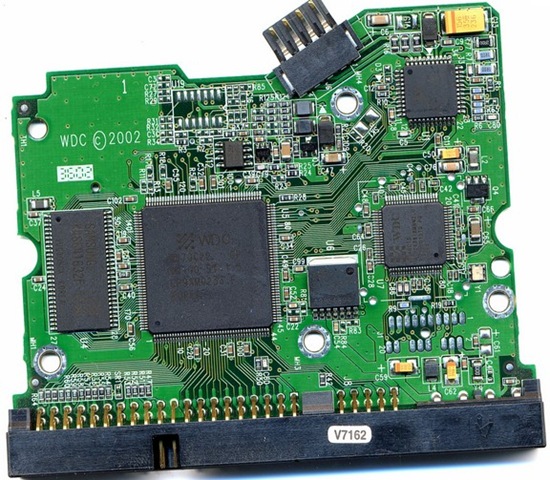
2060-001177-000 WD PCB Circuit Board

HDD Printed circuit board (PCB) with board number 2060-001177-000 is usually used on these Western Digital hard disk drives: WD400BB-00DGA0, DCM HSBHNV2CH, Western Digital 40GB IDE 3.5″ Hard Drive; WD200BB-00DEA0, DCM DSBANV2CH, Western Digital 20GB IDE 3.5″ Hard Drive; WD200BB-60DGA0, DCM HSCACV2CH, Western Digital 20GB IDE 3.5″ Hard Drive The 2060-001177-000 Western Digital PCB repair…

Read More