Top 20 Most Popular Network Attached Storage on Amazon.com

Network-attached storage (NAS) is file-level computer data storage connected to a computer network providing data access to heterogeneous network clients.

A NAS unit is a computer connected to a network that only provides file-based data storage services to other devices on the network. Although it may technically be possible to run other software on a NAS unit, it is not designed to be a general purpose server. For example, NAS units usually do not have a keyboard or display, and are controlled and configured over the network, often using a browser.

A fully-featured operating system is not needed on a NAS device, so often a stripped-down operating system is used. For example, FreeNAS, an open source NAS solution designed for commodity PC hardware, is implemented as a stripped-down version of FreeBSD.

NAS systems contain one or more hard disks, often arranged into logical, redundant storage containers or RAID arrays (redundant arrays of inexpensive/independent disks). NAS removes the responsibility of file serving from other servers on the network.

NAS uses file-based protocols such as NFS (popular on UNIX systems), SMB/CIFS (Server Message Block/Common Internet File System) (used with MS Windows systems), or AFP (used with Apple Macintosh computers). NAS units rarely limit clients to a single protocol.

From Wikipedia: http://en.wikipedia.org/wiki/Network-attached_storage

  • Iomega Home Media 1 TB Network Attached Storage
    (Price: $188.99 Price on Amazon.com: $137.67)
  • Synology DiskStation 2-Bay (Diskless) Network Attached Storage (White)
    (Price: $229.99 Price on Amazon.com: $227.99)
  • Iomega StorCenter ix2-200 1 TB Network Attached Storage (Black)
    (Price: $231.99 Price on Amazon.com: $223.35)
  • Synology DiskStation 5-Bay (Diskless) Scalable Network Attached Storage (Black)
    (Price: $999.99 Price on Amazon.com: $998.55)
  • Seagate BlackArmor NAS 220 2-Bay 4 TB (2 x 2 TB) Network Attached Storage
    (Price: $449.99 Price on Amazon.com: $444.02)
  • Seagate BlackArmor NAS 110 1 TB Network Attached Storage
    (Price: $162.99 Price on Amazon.com: $149.00)
  • Synology DiskStation 4-Bay (Diskless) Network Attached Storage (White)
    (Price: $390.99 Price on Amazon.com: $373.29)
  • Seagate BlackArmor NAS 440 4-Bay 4 TB (4 x 1 TB) Network Attached Storage
    (Price: $835.99 Price on Amazon.com: $699.99)
  • Buffalo Technology DriveStation Combo 1 TB USB 2.0/FireWire 400 Desktop External Hard Drive (Black)
    (Price: $131.99 Price on Amazon.com: $115.99)
  • Seagate BlackArmor NAS 440 4-Bay 8 TB (4 x 2 TB) Network Attached Storage
    (Price: $1,597.99 Price on Amazon.com: $1,299.99)
  • Buffalo Technology LinkStation Quad 4 TB (4 X 1 TB) Network Attached Storage LS-Q4.0TL/R5(Black)
    (Price: $557.99 Price on Amazon.com: $545.67)
  • Buffalo Technology LinkStation Quad 2 TB (4 X 500 GB) Network Attached Storage LS-Q2.0TL/R5 (Black)
    (Price: $457.99 Price on Amazon.com: $392.99)
  • Seagate BlackArmor NAS 420 4- Bay 2 TB (2 x 1 TB and 2 Empty Bays) Network Attached Storage
    (Price: $591.99 Price on Amazon.com: $499.99)
  • Synology DiskStation 2-Bay (Diskless) Scalable Network Attached Storage (Black)
    (Price: $579.99 Price on Amazon.com: $529.99)
  • LaCie 301431U 3TB 2big Quadra 2-Disk RAID Hard Drive
    (Price: $469.99 Price on Amazon.com: $426.80)
  • Synology Disk Station 1-Bay 1 TB (1 x 1 TB) Network Attached Storage DS109 1100 (White)
    (Price: $407.99 Price on Amazon.com: $397.99)
  • Synology Disk Station 4-Bay 4 TB (4 x 1 TB) Network Attached Storage DS409 4100 (Black)
    (Price: $1054.99 Price on Amazon.com: $950.89)
  • Iomega Home Media 500 GB Network Attached Storage 34336
    (Price: $159.99 Price on Amazon.com: $133.81)
  • TRENDnet 1-Bay Diskless USB 2.0 IDE Network Attached Storage Enclosure TS-I300 (Blue)
    (Price: $159.99 Price on Amazon.com: $108.34)
  • Buffalo Technology LinkStation Quad 1 TB (4 X 250 GB) Network Attached Storage LS-Q1TL/R5 (Black)
    (Price: $382.99 Price on Amazon.com: $355.45)

Read More

Sustained Data Transfer Rates For SCSI Hard Drive

Data Transfer Rate Many factors contribute to disk drive performance. One useful measure is data throughput rate or sustained transfer rate. In general, higher data transfer rates from the disk to the computer lead to improved system performance. Data transfer rates are often quoted within the “Specifications” section of the product manuals. Yet it is important to realize that controller overhead, cable quality and termination issues (on older SCSI products) are major factors that affect sustained data transfer rates.

The following specifications are from an older SCSI hard drive. These numbers are used for example, but the same calculations apply to ATA drives. Notice that the internal data transfer rate is listed as sustained, while the external data transfer rate is listed as burst.

INTERNAL DATA TRANSFER RATE (Megabits/sec.)____194 to 340 (sustained)

EXTERNAL DATA TRANSFER RATE – Buffer to SCSI controller (Megabytes/Sec)___Ultra160/m 160 MB/Sec. (burst)

As there are 8 bits to a byte, and 8 Megabits (Mb) to a Megabyte (MB), we divide 194 Mb’s/sec. by 8 to get 24.25 Megabytes/sec. The drive should sustain a transfer rate of 24.25 MB/sec. from the drive platters to the read/write heads, even under the worst possible conditions. The lower number of the range measures data transfer from the inner diameter of the drive platters, where there are the least amount of sectors per track. The higher number of the range measures data transfer from the outer diameter of the drive platters, where the number of sectors is higher per track. Using the higher number of the range (340), the result is 42.5 MB/Sec.

We then have a data rate in Megabytes, of 24.25 to 42.5 MB/sec. Since this is an ‘internal’ data transfer rate, consider it as the raw data rate. Some of this internal rate is lost when translating to the user data rate, because this raw data includes coding overhead that adds length to the user’s data. Add a 25% allowance (more for some drives) for system overhead. In the case of this older SCSI drive, the overhead is approximately 30%. The sustained (user) data rates are actually listed at 17 to 29 MB/Sec. For drives where only the internal data rate is listed, the formula ([Internal rate in Mb/8] x .75 = Approx. data rate in MB ) is used to develop an approximate user data rate.

Most of the time you won’t be getting the lowest sustained transfer performance or the highest, so we should find an average. Using the average of the sustained transfer rates ([17+29]/2=23), you receive an expected average sustained data transfer rate of 23 Mbytes/sec.

It’s very important to realize how these numbers are presented. The internal data rate shown here is expressed in Megabits/sec, the user data rate is written in Megabytes/sec. Certainly, we can tell you, assuming your SCSI (or ATA) subsystem is configured correctly, what your expected sustained transfer rates should be. In this case, a sustained transfer rate of 17 MBytes/sec. to 29MBytes/sec. is acceptable. Your transfer rates may be higher–or lower.

If your sustained user data rates are lower than expected, this indicates a bottleneck in the system. A failing device, improper configuration, and termination issues are leading causes for poor performance. Be aware that transfer rates can be reduced by several issues–poor quality cables, improper cable routing (causes signal reflection), SCSI Single Ended devices on an LVD SCSI bus, host limitations and more.

While you might expect to see 320 MB/sec. transfer from your SCSI Ultra 320 devices, or 300 MB/sec. from a SATA drive, know that these specifications are the burst rate–what the drive’s cache memory buffer can process under the absolute perfect combination of drive, cable, and hard drive controller conditions. Even ambient temperature affects transfer rates. This is not the sustained transfer rate of the drive. It’s what the input/output subsystem is capable of handling. For hard drives, sustained transfer rates are an important benchmark. Only when combining several high-speed drives together (in a performance RAID array), does one approach ‘bus saturation’ speeds.

Read More

Hard drive not recognized

Case:1000GB mobile hard disk in the West, there is no reflection after powering. Solution:The engineer tested that the hard disk circuit board was damaged. After replacing the same type of circuit board, the hard disk motor rotated normally, but the magnetic head made an abnormal noise. It was confirmed that the magnetic head was penetrated…

Read More

Recommended 500GB External Hard Drives

Recommended 500GB External Hard DrivesLooking for external hard drives with 500GB capacity? please refer to this guide.

Today’s Storage disks’ capacity upgrade day by day. A few years ago, purchased a 1GB U-disk, you would already feel it was a great capacity and could not expect the 8GB, 16GB U-disks become noting in today. Moreover, the capacity of the external hard drive is extremely huge. You can see 1TB, 2TB’s external hard drives everywhere, greatly eased people’s requirement to massive data transmission. Many manufacturers have launched promotions for this capacity external hard drive. I have collected many promotions information to shall with you. Before you purchase these external hard drives, you can refer:

Seagate Expansion 500GB Desktop External Hard Drive ST305004EXA101-RK
(Model: ST305004EXA101-RK Price: $99.99 Amazon.com Price: $58.19 Form Factor: 3.5″)

Review: “I easily reformatted it with fdisk (to make a Linux partition) and mkfs (to make an ext3 file system) so as to make it friendly with my Linux machine (running Scientific Linux—basically RHEL 5.0), and it works like a charm. It is immediately recognized; all I need to do is to plug in the USB. It is also very quiet.”

Cirago CST4500 500GB USB2.0 External Hard Drive
(Model: CST4500 Price: $59.99 Form Factor: 3.5″)

Review: “I haven’t delved into the accuracy of the advertised specs but it functions exactly as I expected when I made the purchase. I know my system holds it back from full speed performance(laptop HDD not as fast as this thing so copy speeds aren’t phenomenal) so that’s not something I hold against it. Actual usable space is something like 460GB but don’t quote me on that. The stand is nice, helps it stay cool I s’pose. Speaking of which, I’ve had ZERO heat problems after the year or so I’ve owned and used it.”

Seagate Expansion 500GB USB2.0 External Hard Drive ST905004EXA101-RK
(Model: ST905004EXA101-RK Price: $89.00 Amazon.com Price: $59.99 Form Factor: 2.5″)

Review: “Acceptable transfer rate over USB 2.0, doesn’t need an external power source, extremely portable.”

Western Digital My Passport Essential 500GB External Hard Drive
(Model: WDBACY5000ABL-NESN Price: $99.99 Amazon.com Price: $78.52 USB2.0/3.0)

Review: “Fast and easy, runs very cool. Of course I have it on top of my HAF 932, and that big old fan makes sure it don’t even get warm. Can’t beat the price for what you are getting. Disk Image of Win7 Prem, and X/P Home in under 3 Hours start to finish 382 GiGs. Great shipping from the EGG, as they never fail.”

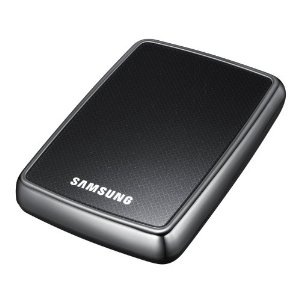
Samsung S2 500GB External Hard Drive HXMU050DA/G22
(Model: HXMU050DA/G22 Price: $103.99 Amazon.com Price: $77.99 Form Factor: 2.5″)

Review: “”Really small, comes with a cable. Some people complain about the cable being small but it is for a reason. With this short cable it allows fast transfer speeds. “

Considerations for External Hard Drives

One drawback to using external hard drives for backups is that they are still relatively new for home computer use. They come with Windows drivers; should Windows fail, you will not be able to access your external drive through DOS. There are DOS drivers available but they can be difficult to find and most manufacturers do not provide support for them. This isn’t a frequent occurrence, just something to keep in mind as you select your external hard drive.

Read More